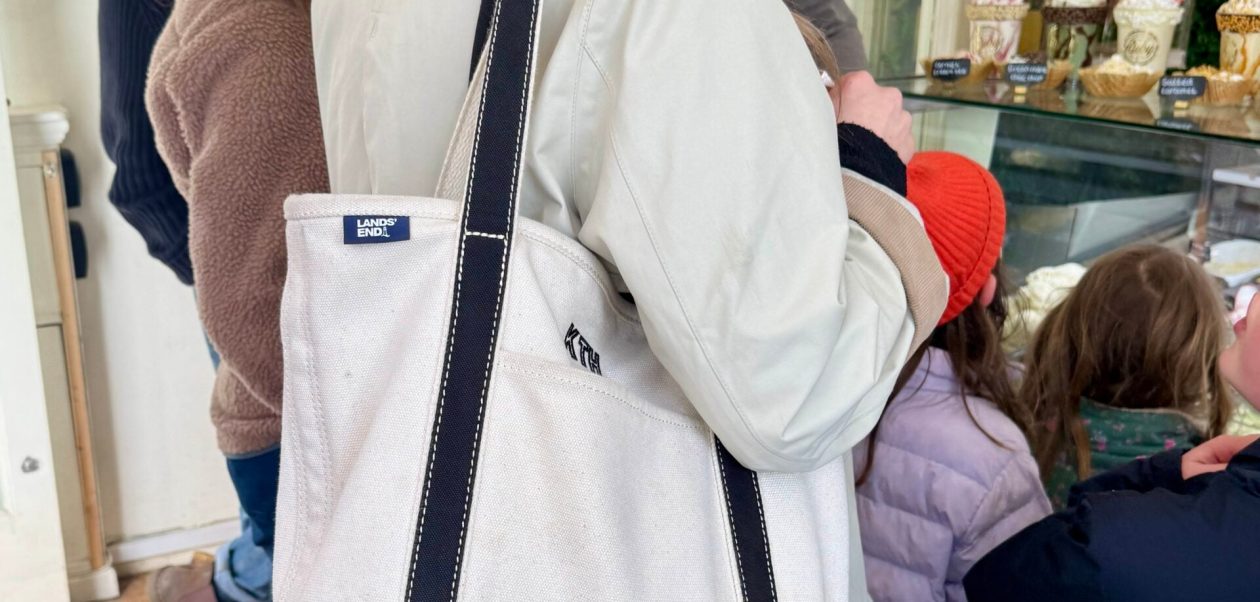
Last week, at an ice-cream shop in England, I noticed a stylish mom with a Land’s End tote. They’re classic in the U.S., and perhaps in England, as well? It serves as the ideal summer bag for bundling up picnic blankets, beach gear, towels, books, snacks, anything you need. Here’s the one she had (also featuring a zip top); and I’m fond of this denim version, too.
More people showcasing them, in the U.S.: Haley Lyndes with metallic, puppy with camel, Jannelle Sanchez with a similar mini tote, Erika Veurink with red)
My sister recently asked me which bag to choose for daily adventures with her daughter, and the answer was straightforward.
Which massive bag do you rely on? (This is another favorite of mine.)
P.S. A tribute to wearing primary colors, and what’s always in your bag?
(If you’re interested in the top look, I found similar pieces: red triangle scarf, barn jacket or this one or this one, linen pants.)
The Omnipresent and Legendary Bag Found Everywhere: The Tote Bag
In the realm of fashion and practicality, few items have reached the widespread and legendary status of the tote bag. This adaptable accessory, with its uncomplicated design and utilitarian nature, has become a fixture in wardrobes around the world. From busy urban streets to tranquil coastlines, the tote bag is a reliable companion, serving as both a fashion statement and a practical necessity.
**A Brief History**
The origins of the tote bag trace back to the 17th century, but it wasn’t until the 1940s that it evolved into the modern form we recognize today. L.L. Bean, the American outdoor retailer, launched their “Boat Bag” in 1944, intended to transport ice from car to freezer. Its robust canvas build and open-top design rapidly gained popularity, propelling the tote bag into mainstream fashion.
**Design and Functionality**
The tote bag’s design is notable for its large, open-top structure, durable handles, and capacious interior. Commonly crafted from materials like canvas, cotton, or leather, the tote bag is designed for longevity and ease of use. Its simplicity is its key strength, allowing it to adapt to diverse styles and functions. Be it carrying groceries, books, or beach necessities, the tote bag is equipped to manage it all.
**Cultural Significance**
Throughout the years, the tote bag has transcended its practical beginnings to become a cultural icon. It frequently serves as a platform for self-expression, with brands, artists, and activists utilizing it to communicate messages, exhibit art, or support causes. The tote bag has become a sustainability emblem, as its reusable nature aligns with the increasing environmental awareness of consumers. Many choose tote bags over plastic ones, aiding in the reduction of single-use plastics.
**Fashion and Trends**
In the fashion industry, the tote bag has been embraced by designers and fashion houses, transforming it from a utilitarian accessory to a luxury item. High-end brands have created their own versions, featuring premium materials and intricate designs. Despite its luxury iterations, the tote bag remains accessible, with numerous affordable options available, ensuring its popularity across all demographics.
**The Tote Bag in Everyday Life**
The tote bag’s versatility is unparalleled. It effortlessly shifts from a weekday necessity to a weekend must-have. Its capacity to hold a laptop, gym attire, or a picnic makes it indispensable for contemporary life. The tote bag’s versatility is further enhanced by the potential for personalization, with many adding patches, pins, or embroidery to make it uniquely theirs.
**Conclusion**
The tote bag’s journey from a utilitarian item to a style icon underscores its enduring appeal and practicality. Its presence in daily life reflects its adaptability to evolving needs and trends. As a symbol of pragmatism, sustainability, and elegance, the tote bag remains an omnipresent and legendary accessory seen everywhere, cherished by individuals of all ages and backgrounds.