Recently, my six-year-old, Margot, turned to me and announced: “Mommy, I’m going to teach you to draw something that you DON’T know how to draw.” She requested my notebook, which, of course, I gave her immediately. I remember moments like these — picking up an unconventional doodle at school and being so thrilled to have someone to reveal it to. That crossed my mind as she picked up her pencil and meticulously sketched — wait. Do you want to guess? I’ll provide a clue: It begins with three vertical lines.
Exactly: THE S THING!!! Did you know kids are still creating the S thing?! I nearly shrieked when Margot presented it to me. “What?” she wondered, as I gasped and burst into laughter, my mind immediately flooded with elementary school memories: the sketches, the playground chants, the silly games and rituals. “Nothing!” I said. “That’s amazing; you’ve GOT to show daddy.” He actually yelled when he spotted it.
The event truly led me down the rabbit hole — and I was thrilled to find there is a devoted following, so to speak. “The Cool S,” is a relic of childlore: the traditions and customs of children. Essentially, it’s what kids assimilate from their peers, then share amongst themselves, completely uninfluenced by adults or technology. Consider: the buttercup test, “crack an egg on your head,” Miss Mary Mack, jinx (double jinx!), and everything you picked up from your cousins. There’s extensive anthropological research on this subject, which I adore because honestly, what an entertaining and intensely annoying field of study it must be. Picture asking a first-grader why saying the same word simultaneously means one of them isn’t permitted to speak again, until they are “un-jinxed.” (Has anyone ever been effectively un-jinxed, by the way? I think I’m still technically waiting.) Children have reportedly been drawing The Cool S since at least the 1980s, and still, nobody’s determined its origin.
Since Margot sketched the S, early childhood antics have become my favorite topic starter. It’s fantastic to observe everyone’s expressions go slack as their personal memories unlock and spill everywhere. “Remember typing ‘BOOBS’ on a calculator?!” someone will exclaim. “Or — or that thing where you’re driving by a cemetery and you have to hold your breath?” I love hearing the small differences in details (some people grew up lifting their feet off the floor when passing a graveyard). But what’s amazing is how many of us grew up playing, doodling, singing, and believing the exact same absurd little things: Miss Susie had a steamboat, Batman smelled, the floor was lava, and stepping on cracks broke our mothers’ backs. What’s even more astonishing — and sort of wonderful — is knowing that, although we have moved beyond childhood culture, there are kids out there, still upholding the silly, gross customs of our youth. That Cool S will keep emerging in notebooks long after we’re no more. And somewhere, a research scientist is attempting to unravel the mystery of six-seven. Godspeed, friend.
So, I’m DYING to ask: What childlore do you remember? Personally, I still can’t believe the word “gullible” isn’t in the dictionary.
P.S. The funniest game to play with kids (a childlore classic!) and a great conversation-starter for all ages.
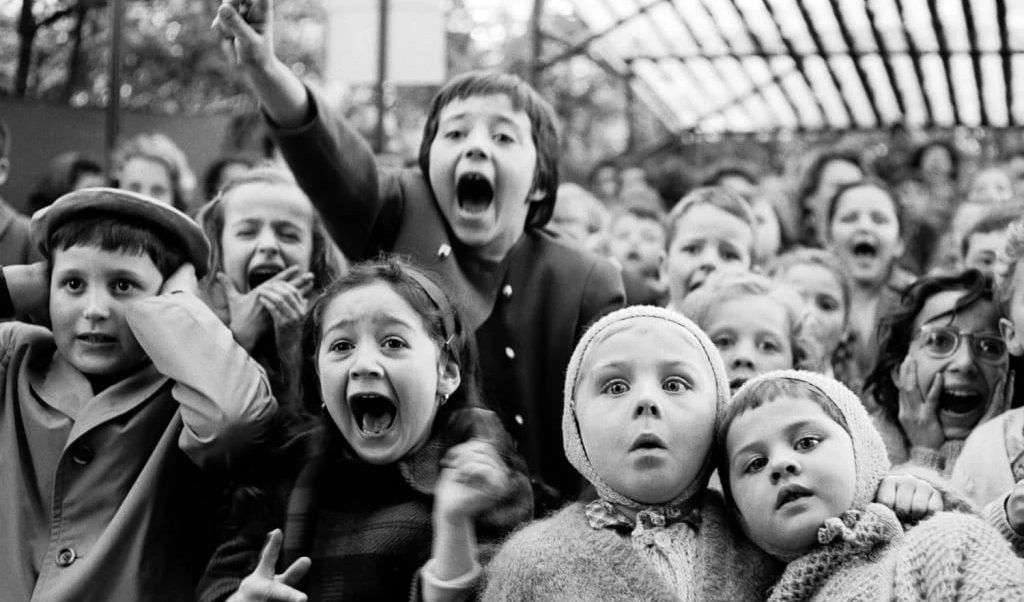
(Photo of a puppet show in Paris, 1963, by Alfred Eisenstaedt.)
Title: Memorable Childhood Rhymes and Games: What Do You Recall?
Childhood is a time of innocence, exploration, and joy, often marked by the simple pleasures of rhymes and games. These activities not only entertained us but also played a crucial role in our social and cognitive development. Let’s take a nostalgic journey back to some of the most memorable childhood rhymes and games that many of us hold dear.
**Nursery Rhymes: The Melodies of Our Youth**
Nursery rhymes have been a staple of childhood for generations, passed down from parents to children. These short, rhythmic verses are not only fun to recite but also help in language development and memory enhancement. Some of the most iconic nursery rhymes include:
1. **”Twinkle, Twinkle, Little Star”** – A soothing lullaby that has lulled countless children to sleep, teaching them about the wonders of the night sky.
2. **”Humpty Dumpty”** – This rhyme tells the story of an egg-shaped character who takes a great fall, sparking imagination and teaching the concept of cause and effect.
3. **”Jack and Jill”** – A tale of two children who encounter a mishap while fetching water, illustrating themes of adventure and resilience.
4. **”Ring a Ring o’ Roses”** – Often accompanied by a circle dance, this rhyme has mysterious origins and is a favorite in playgrounds worldwide.
**Classic Games: The Joy of Play**
Games are an integral part of childhood, fostering teamwork, strategy, and physical activity. Many classic games have stood the test of time and continue to be enjoyed by children today:
1. **Hopscotch** – A game that requires chalk, a small object, and a bit of balance. Children hop through numbered squares drawn on the ground, combining physical activity with number recognition.
2. **Hide and Seek** – A universal favorite that involves one player closing their eyes and counting while others hide. This game enhances spatial awareness and stealth.
3. **Tag** – A simple game of chase where one player is “it” and must tag others. It promotes speed, agility, and social interaction.
4. **Duck, Duck, Goose** – Players sit in a circle while one walks around tapping others on the head, calling “duck” or “goose.” When “goose” is called, the chosen player must chase the tapper, adding excitement and anticipation.
**Hand Clapping Games: Rhythm and Coordination**
Hand clapping games combine rhythm, rhyme, and dexterity, often played in pairs or groups. They are a delightful way to develop hand-eye coordination and social bonds:
1. **”Pat-a-cake”** – One of the earliest hand clapping games, involving a simple rhyme and clapping pattern, often played with toddlers.
2. **”Miss Mary Mack”** – Known for its catchy tune and repetitive clapping sequence, this game challenges memory and coordination.
3. **”Say, Say, Oh Playmate”** – A game that involves singing and intricate clapping patterns, fostering creativity and teamwork.
**Conclusion: The Timelessness of Childhood Rhymes and Games**
Childhood rhymes and games are more than just pastimes; they are cultural treasures that connect generations. They teach valuable lessons, enhance developmental skills, and create cherished memories. As we recall these delightful activities, we are reminded of the simplicity and joy of childhood, encouraging us to pass them on to future generations. Whether through the soothing melody of a nursery rhyme or the exhilarating chase of a game of tag, these experiences remain etched in our hearts, a testament to the timeless nature of play.