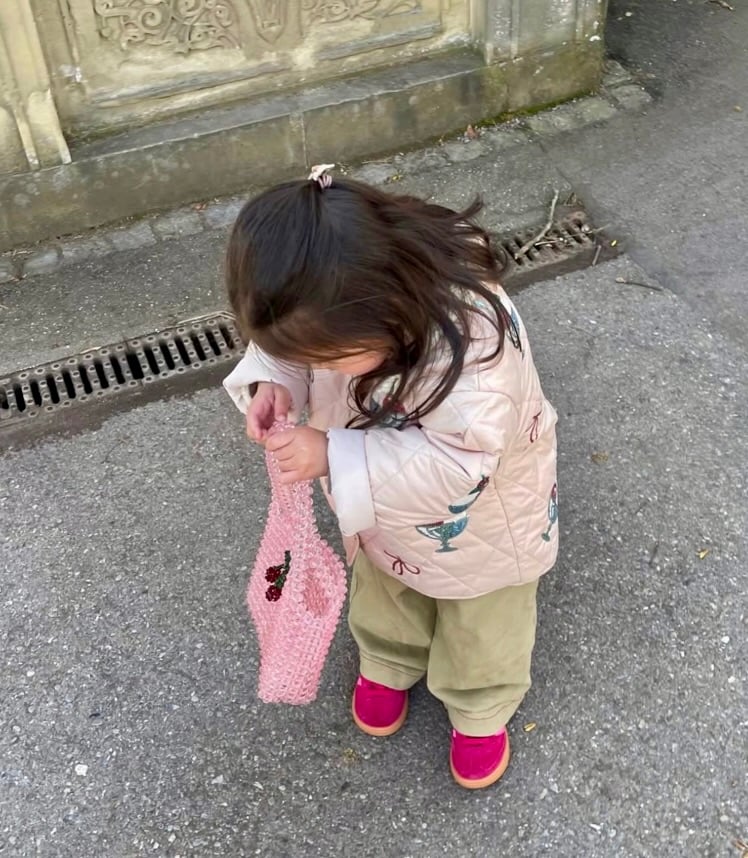
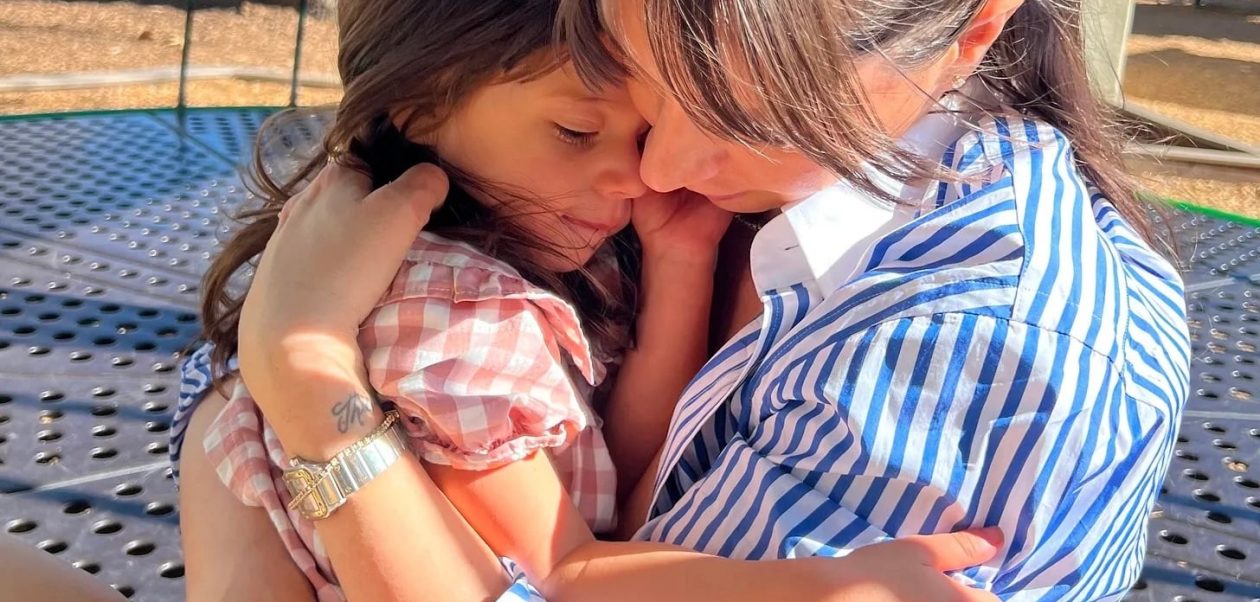
I wish you could see my expression at this moment. There’s a distant, resolute look I strive to avoid. I don’t appreciate the “Oh my god, how do you do it all” notion, but to be truthful: The past three years have been about endurance.
My spouse Davide and I attempted for over a year to conceive. I endured a miscarriage, and the sorrow that ensued, then kept pushing forward. A fertility specialist informed us we couldn’t conceive naturally, but then, just before starting IVF, the miracle occurred.
When Carmela arrived, we were overwhelmed with joy. She was a cheerful, social infant. She made eye contact and giggled. However, I began to notice some motor delays. At six months, she couldn’t hold her own bottle, and I noticed other infants were stronger. She couldn’t support herself on a slide. Yet, she seemed to be progressing in other aspects, so I set the thought aside.
The intense concern started around a year, and was full-blown by 18 months. That’s when children not achieving certain milestones — such as walking or standing — qualify for government intervention programs. Carmela wasn’t even pulling to stand.
I tried to remain calm, telling myself what others were saying: “Crawling for an extended period is beneficial for development!” But it became apparent something was amiss. What I hadn’t realized was this would be the first of many experiences of her being unique. The glances. My awkward, clumsy explanations. The way I had to unwind after every social interaction, processing what had just happened, while pretending all was normal.
We found a new pediatrician — a compassionate, attentive woman who also happened to have a neurodivergent child. She spent 45 minutes with Carmela, then looked at me and said, “Your daughter hasn’t made eye contact with me this entire time. She’s not at the physical level she should be.” She urged us to begin immediate intervention at our regional center.
We embarked on the lengthy, bureaucratic journey, which required a patience I had to develop instantly. While waiting, I located a local physical therapist, who turned out to be exactly what Carmela required. It took another six months, but she eventually learned to walk. I also delved into research and finally grasped the thing no one, frankly, had the courage to tell me: The brain controls the body, and if those two aren’t communicating correctly, it’s not just physical delays, but neurological ones. I took Carmela to a neurologist, who conducted genetic tests. The result came swiftly: Carmela had the SCN2A variant, which leads to autism, hypotonia, and other conditions.
I handled everything privately — the appointments, paperwork, the physical therapy commutes across town — all the while trying to maintain a presence at dinner parties, and answer the query: “How’s being a mom?” I would break into a strange, nervous babble about how she was doing great but there were delays and there was this mutation, and we weren’t quite sure what it all signified. I was a wreck. I didn’t have the vocabulary for anything yet.
Davide was heartbroken differently. Initially, he kept repeating: There’s nothing wrong with her. She’s perfect. And she was. But at the park one day, I pointed out to him all the things she couldn’t physically do. We broke down. I explained that the sooner we intervened, the better off she’d be.
We received Carmela’s official diagnosis at two. Your daughter has autism. After the doctor’s visit, we got into our car, and my husband and I just sobbed. Minutes later, Carmela began crying — she knew, as she always does. My dear girl, so distant, yet profoundly connected. In that moment, I realized how crucial it was for me to keep my emotions and feelings in check around her, no matter how valid they were.
Nearly three years have passed since her diagnosis. A whirlwind of appointments, daily therapies, preschool enrollment, having to change preschools, and the perpetual quest for specialists, programs, and TikTok posts that might provide another answer. I’ve grown adept at losing myself in the doing. The more I push ahead, the more appointments she has, the more I feel like we’re paving a path to assist her. That sustains my sanity.
Some believe autism shouldn’t be ‘fixed’; that these children are born exactly as they should be. I concur with that — I’m not attempting to alter my daughter’s frequency or dim her magic. Her brain should be appreciated for its uniqueness. But she cannot convey her need to use the bathroom. She can’t tell me she’s hungry, thirsty, or in pain. She can’t express her needs, and I can see the fatigue and frustration in her eyes. It manifests as aggression, regression, sleep disruption, and mental cloudiness. That is not joy. That is suffering. My aim isn’t to ‘fix’ her. I’m trying to provide her tools to navigate the world, because I won’t always be around. And she deserves to live a life without me needing to translate and navigate every moment for her.
I’m aware of my good fortune. I’m shedding tears as I pen this because many parents face unimaginable challenges, and I have a healthy, beautiful child in front of me. But multiple truths coexist, and it’s tough that she’s nearly five and has never uttered “Mommy.” She has no sense of danger and will dart into traffic if I release her hand. She’ll place a knife in her mouth; she’ll swallow stones. Her younger brother, Carlo, will follow me and respond when I call. Carmela is miles from that. Every day of my life, I am ALERT.
The contrast between Carmela and Carlo is indescribable. There’s no way to put into words the experience of raising one neurotypical and one neurodivergent child. But I will say there are moments where I almost feel resentful about everything Carlo can do. Not at him, never at him, but at the gap between what comes so naturally to him and costs Carmela everything. He loves her. He yearns for her. He washes her hair, knocks her over with hugs. She endures him — mostly pushes him away. When Carmela locks eyes with you, you feel you’re the only person in the world. But having a son who is so affectionate and a daughter who can’t hug is just…an experience.
Our private world and the real world are two distinct places, and I exist in both simultaneously. At home, we sing and dance and do our thing, and then we enter the real world and it’s “why won’t she talk,” or I’m writing emails to entire classrooms explaining she won’t harm anyone, or I’m shouting her name at the pool while another parent jumps in to pull her out.
That’s where the grieving process comes in. Every parent must relinquish some version of the life they envisioned, but, for me, it sometimes feels like everything: Ballet. Cooking together. Painting. Movies. Conversations. Every dream I had for us, and for her, I’ve had to mourn, silently, without a ceremony. Carmela is one of the most extraordinary beings I have ever known. But the effort of reaching her, of gently pulling her into a world not designed for her, is gradual.
I am overjoyed just being around her. I am devastated. I live a life filled with genuine delight, and then I’ll be alone in my car and, out of nowhere, I’ll scream. There’s a constant chorus of people saying, “She’s going to be great. It’ll be fine.” And there’s the possibility that this is her, and always will be. That I may never have a genuine conversation with my daughter. I am learning, gradually and imperfectly, to accept that truth without falling apart. Some days I can. Some days I can’t. The fear resides alongside the acceptance, and always will. On the day I die, my final thought will be: What happens to her when I’m gone?
This is autism awareness month. This is what I wish to highlight.
Pia Baroncini is the creative director of LPA and co-host of the podcast Everything is the Best. You can follow her on Substack, if inclined.
P.S. What disability enlightened me about parenting, and what experiencing autism feels like.
(Photos courtesy of Pia Baroncini. This post first appeared on Pia Baroncini’s newsletter; this essay, which has been edited/condensed for length, is being published here with Pia’s permission.)
**Grasping Autism: Insights into My Daughter’s Path**
Autism Spectrum Disorder (ASD) is a multifaceted developmental condition that affects individuals uniquely, and understanding it is vital for nurturing an inclusive and supportive environment. Regarding my daughter, her autism is a special part of her identity, shaping her interactions with the world around her. Here’s what you should know about her autism and how it influences her life.
**1. Autism is a Spectrum:**
Autism isn’t a uniform diagnosis. It’s a spectrum, implying that individuals with autism can exhibit a vast range of symptoms and abilities. My daughter’s autism presents uniquely in her, and recognizing this individuality is crucial.
**2. Communication Differences:**
A primary area where autism can impact is communication. My daughter might experience difficulties with verbal communication or might favor non-verbal methods like gestures or using assistive technology. Patience and understanding are vital when communicating with her, as she may require more time to process information and reply.
**3. Sensory Sensitivities:**
Many individuals with autism have sensory sensitivities. My daughter might be hypersensitive to certain sounds, lights, or textures, which can overwhelm her. Recognizing these sensitivities and making adjustments, such as offering a quiet space or using noise-canceling headphones, can assist her in feeling more at ease.
**4. Routine and Predictability:**
A structured routine can be enormously beneficial for my daughter. Predictability helps minimize anxiety and enables her to navigate her day with increased assurance. Sudden changes can be unsettling, so providing prior notice and preparing her for transitions is essential.
**5. Strengths and Interests:**
My daughter possesses unique strengths and interests that are an integral part of her character. She might excel in areas like art, mathematics, or technology, and she often has intense passions she is enthusiastic about. Encouraging these interests can enhance her confidence and offer opportunities for development and learning.
**6. Social Interaction:**
Social interactions may be challenging for my daughter, as she might struggle to interpret social cues or engage in typical social exchanges. However, she is still capable of forming meaningful relationships and enjoys being around understanding and patient individuals.
**7. The Importance of Support:**
Support from family, friends, educators, and the community is vital for my daughter’s development and well-being. Inclusive education, therapy, and social support networks can significantly impact her life, aiding her to reach her full potential.
**8. Advocacy and Awareness:**
Promoting awareness about autism and advocating for acceptance and integration are essential steps in establishing a supportive environment for my daughter and others on the spectrum. By educating ourselves and others, we can break down barriers and promote understanding and compassion.
**Conclusion:**
Understanding my daughter’s autism involves recognizing her individuality and supporting her in a way that honors her unique needs and strengths. By fostering an environment of acceptance and empathy, we can help her thrive and lead a fulfilling life. Autism is only a part of who she is, and with the proper support, she can achieve incredible things.