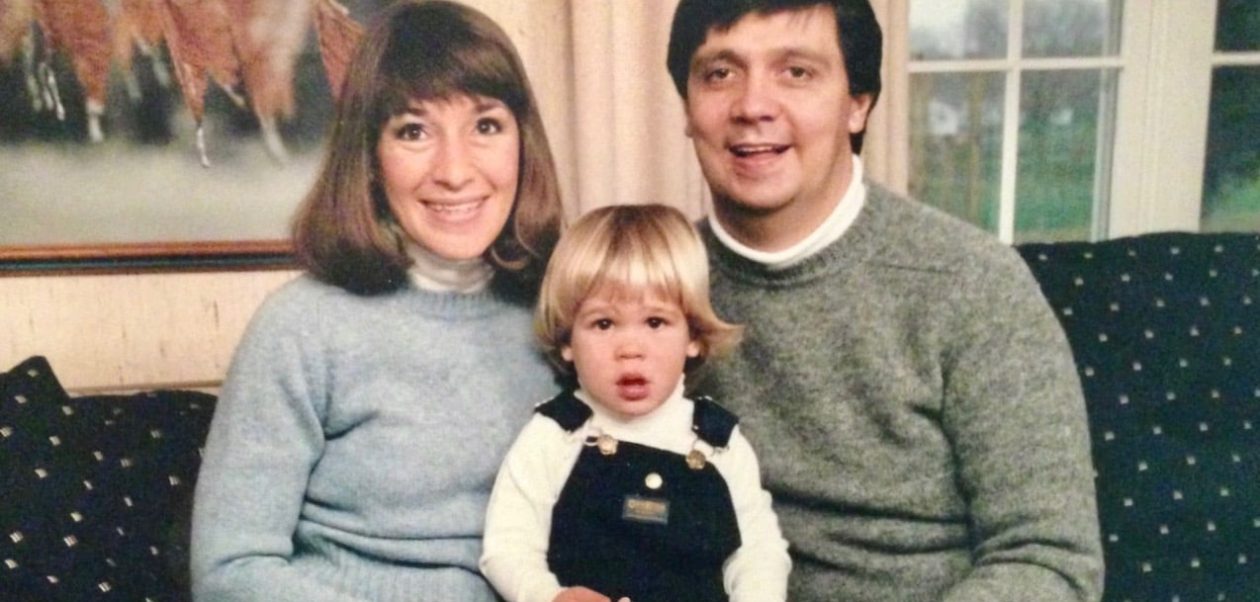
During my childhood, people assumed my parents were divorced. Not because they argued publicly in parking areas. It’s because they took separate trips with me. In January, my dad would bring me to Colorado for skiing. Then during spring break, my mom would take me to Boca to sunbathe all day and watch movies at night. This setup was perfect for two parents who dearly love each other but have vastly different interests. My mom isn’t fond of cold weather, and my dad doesn’t enjoy “sitting around in the dirt.” Therefore, they vacationed separately, and the perk of being an only child was I got to enjoy both trips. (I can’t understand why only children are labeled as spoiled.)
I never felt like I had an ordinary family. And I don’t mean it in the way someone claims, “We’re not a normal family” only to reveal a typical couple with three kids who occasionally have breakfast… FOR DINNER! Clearly, the idea of a normal family is a myth stemming from Christianity and capitalism persuading people to buy sectional sofas and bulk toilet paper. Yet growing up, I couldn’t shake the feeling that my family was different as I didn’t have siblings.
Just like most kids my age, I eagerly anticipated TGIF on ABC, the lineup of family sitcoms airing every Friday night. These shows portrayed numerous family types, yet the common element was multiple children. Some featured large families, others blended ones, but few depicted my life: a sole child residing with two adults. Perhaps because that’s not entertaining for kids — it would mostly involve adults handling mail while the child reads alone. It might not make good television, but it was definitely a nice life.
During the prime of BuzzFeed quizzes and millennial meme culture, I was inundated with content analyzing what birth order reveals about you. Personality traits, preferences, and conflict styles were conveniently linked to being the eldest, middle, or youngest child. When these memes occasionally included an only child, it suggested, “Oh yeah, and these oddballs have no clue how to fight.”
When asked if being an only child was strange, I say no, since I knew no alternative. Having siblings felt as foreign as having a pet iguana whose tail perpetually fell off and was discovered behind doors or in couch creases, like my friend Sean’s did. Naturally, I had my own room; there was no one to share it with. Clearly, all these toys and clothes were mine; whose else would they be? Surely, I am poor at managing conflict; with whom would I have quarreled? My stuffed animals? They’re all pacifists, even Walt the warthog.
I seldom envied friends with siblings: The younger ones seemed like odd little babies, while older ones appeared like jerks assuming we were odd little babies. Sometimes, it was pleasant to visit a friend’s house with enough kids to play Capture the Flag. But I mostly recall getting home, heading to my room, and lying silently on the bed like a 44-year-old unwinding after a tiresome day at work. And I knew the sole person who might interrupt me was my mom announcing it was nearly dinnertime — a meal I enjoyed since you have more liberty to be particular as an only child, with just one finicky palate to cater to.
As a preteen, however, I sometimes longed for a sibling: particularly, an older sister. From what I understand, older sisters are the meanest beings alive, but they’re also the gatekeepers of womanhood. They know about tampons, foundation, dance invites, and that high school cool girls ditch backpacks and opt for messenger bags. I was devoted to my stacks of teen magazines, but flipping the stark white pages of Seventeen isn’t the same as your sister entering your room, pulling out a lip liner, and instructing you on its use. With an older sister, you wouldn’t resort to using the metallic gunmetal-gray Lancôme eye shadow your mom gifted from a Nordstrom bonus, applying it solo in dim bathroom light, then attending the Friday-night dance appearing as if a robot punched you in the eye.
Instead, since I was the youngest by over two decades, everything — activities, entertainment, topics — was aimed at adults. And I enjoyed mingling with the “big dogs” (i.e., discussing my parents’ interests). I was the kid comfortably befriending teachers, chatting more like peers, as that’s how things were at home. (I’m sure they appreciated that and weren’t at all annoyed by a nine-year-old’s take on 60 Minutes.)
There’s one aspect of being an adult only child, though, that greatly worries me. As my parents age, I grow increasingly conscious of my role as their lone caregiver. The prospect terrifies me beyond words. As they approach their seventies, do I wish at times for a sibling to face future uncertainties together? Certainly. Would I forfeit my experiences as my parents’ only child to gain that? Absolutely not.
My parents and I engage in activities others might not, like spending quality time just the three of us. Our annual winter trip exemplifies this. Years ago, we decided against giving gifts among us and pooled the funds for one grand vacation. Every January, we head to Aruba. It’s my favorite week annually. We arrive separately, spending sunlit days reading and drinking together. Later, we dine at one of the numerous Italian restaurants in Aruba for some reason. I love it as it’s only us. It feels like a tropical version of what daily life was like in our home. We aren’t compelled to accommodate anyone else. We do what we please, when we please. And my dad doesn’t mind reading his book “sitting in the dirt.”
Alison Leiby is a writer and producer, and co-host of the podcast, Ruined. Her television work includes The Marvelous Mrs. Maisel, Life & Beth, and Ilana Glazer’s Comedy on Earth special. Her writing has appeared in The New York Times, New York magazine, McSweeney’s, Cosmopolitan, and many other outlets. This shortened excerpt is from her new collection of essays, I’m a Lot, which came out earlier this month. You can buy it here, if you’d like.
P.S. More posts about only children and what age gaps do your kids have?
(Author photo by Mindy Tucker, family photo courtesy of Alison Leiby. Excerpted from I’m a Lot by Alison Leiby. Copyright © 2026 by Alison Leiby. All rights reserved. No part of this excerpt may be reproduced or reprinted without permission in writing from the publisher.)