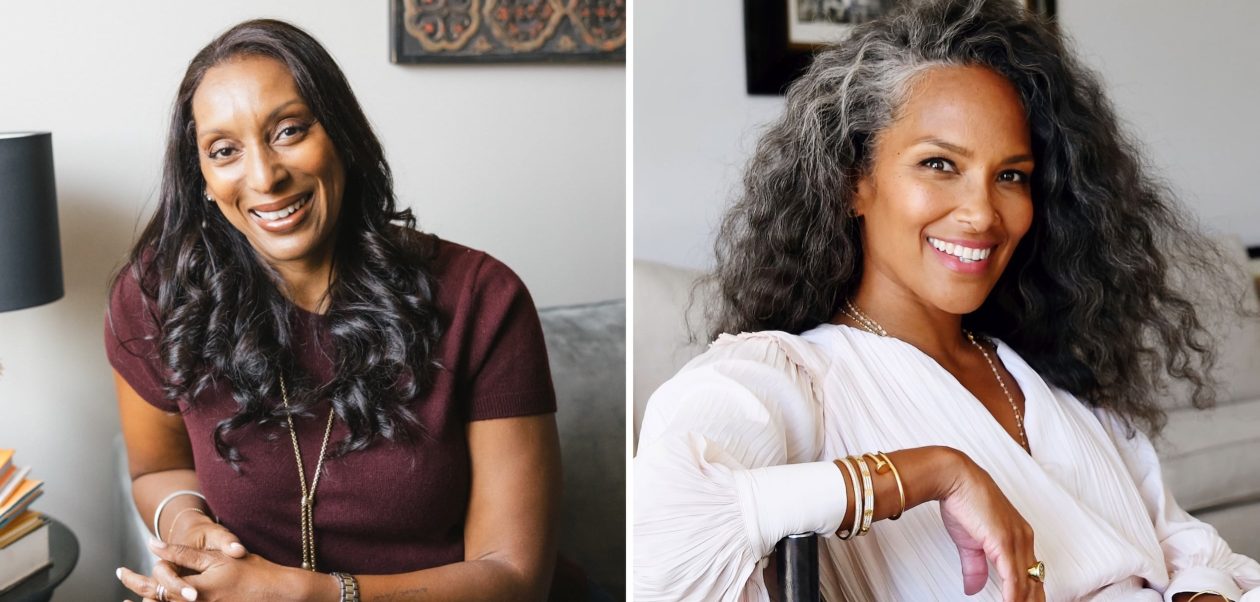
Christine Pride, left; Mara Brock Akil, right
At six years old, I questioned my parents about the absence of people who resembled us on television. While books allowed me to imagine characters that looked like me, the majority of mainstream media was predominantly white. Even at a young age, I sensed something wasn’t right. It conveyed a message I was just starting to grasp.
Then, in 1984, The Cosby Show emerged. It’s challenging to express the series’ impact, not just personally but on cultural norms as a whole. For numerous white individuals, this sitcom offered their first glimpse of a family of this nature (Black people — they’re just like us!). For many Black viewers, it was a rare moment to see ourselves on screen. Despite the show’s legacy having been marred, its debut marked a pivotal moment and the onset of a prosperous era for Black television.
Shows such as A Different World, Living Single, and The Fresh Prince of Bel-Air created further opportunities for Black performers and storytellers. Renowned showrunner Mara Brock Akil began her career on one of those groundbreaking sitcoms — Moesha — and went on to produce a multitude of successful series over two decades, including Girlfriends, Being Mary Jane, and the recent adaptation of the Judy Blume novel Forever.
Currently, Mara has ventured into a novel medium: books! Her debut novel, The Revelation of Dionne Daphne, follows a woman in early-90s NYC, anticipating the outcome of an HIV test. As a long-time admirer, I was eager to discuss with Mara her pioneering career, overcoming shame, and the lasting influence of love stories…
Mara on the lot
You’ve always prioritized Black women in your creations. Did you initially feel an obligation to do so, or was it simply about sharing your narratives?
Both. When I attended journalism school in the ’90s, “Black” stories fell into two categories: either crime and trauma or triumphs in sports or entertainment. The intermediate experiences were nonexistent, sparking something within me. I recognized that the tales of my family and community were not only underrepresented but also significant and universal. I made it my mission to narrate stories like those.
As a writer, I’m constantly pondering, ‘Who is the audience?’ You can’t cater to everyone, but in competitive fields like publishing and TV, gatekeepers control which stories receive attention. How do you contemplate your target audience?
I perceive culture as a dinner gathering with myself as a participant. I engage in dialogues with others too — like painter Amy Sherald and singer-songwriters Solange and Jazmine Sullivan (whose latest album I’ve been enjoying). For me, storytelling aims to advance that conversation.
Mara at a book reading
Your novel, The Revelation of Dionne Daphne, captivated me. Why choose to write a book over a screenplay?
Honestly, promoting anything centering a Black woman in TV/film still poses challenges. But this story lingered in me for long, and when a book editor approached, I considered it might unfold best on paper. Dionne is a young, thriving Black woman in the ’90s — the era of ‘I can do bad all by myself.’ Outwardly composed, what burdens does she bear unseen?
If culture is a conversational dinner, what topic does this book want to raise?
Shame. Capitalism feeds on our shame. Imagining us all at that dinner, I ponder: What if we all laid it down? That’s Dionne Daphne’s journey. She raises her hand, shares her story, shedding her shame to discover her true self. Maybe it encourages someone else to do the same.
Your novel dives into challenging, potentially triggering themes. Many “Black” stories involve pain and struggle due to historical truths. How do you integrate reality while avoiding stereotype and trauma porn traps?
I aim to spotlight our beauty and resilience: how we carry so much. Think of our survival. Considering everything faced by Black people — how do we endure? We strive not to be mired in pain, yet there’s a gap between coping and genuine healing. Currently, many seek healing by acknowledging wounds and unburdening. There lies power.
The TV series Forever
Finally, I must ask about Forever, your series based on Judy Blume’s renowned and frequently banned novel about two teens discovering intimacy. I recall reading dog-eared pages under covers. You’ve reimagined this tale with contemporary Black characters for TV. Discuss that decision.
I realized Forever couldn’t be directly adapted. I maintained the core — two youths falling in love — and reflected on their modern-day challenges in America. First published in 1975, the book followed the availability of the birth-control pill, granting young women more autonomy and safety in exploring sexuality. That was the “modern” backdrop for protagonist Katherine’s story. But what if seen through a young Black boy’s eyes in 2018? What does safe exploration of his sexuality entail? The scenario shifts; race and gender factor in differently. Yet, the essence and freshness of first love remain unchanged. I aimed to remind people of young individuals deserving exploration and growth opportunities. Are we fostering that? Protecting it? Guiding them without severe consequences? Justin and Keisha encounter obstacles familiar to today’s America. We root for this young Black couple, in love, staying true to themselves.
Christine and Mara
Thank you for such an insightful conversation, Mara! Congrats on your compelling new novel. To all you Forever enthusiasts, Mara is developing season two. I’m keen to hear how a book or TV show impacted or shaped you. Share your stories in the comments…
Christine Pride is a writer, book editor, and content consultant residing in Harlem, New York. Her latest book, All The Men I’ve Loved Again, is available, and you can explore her previous Cup of Jo contributions here.
P.S. Explore more Race Matters content, including five messages for my white friends.
(Photography of Christine Pride by Yumi Matsuo for Cup of Jo. Mara Brock Akil’s headshot by Emma Feil.)