
Each month, we’ll delve into a straightforward technique or a piece of kitchen intelligence that will transform your cooking. Back to Basics isn’t about retaining another recipe — it’s about mastering something so well you won’t need one.
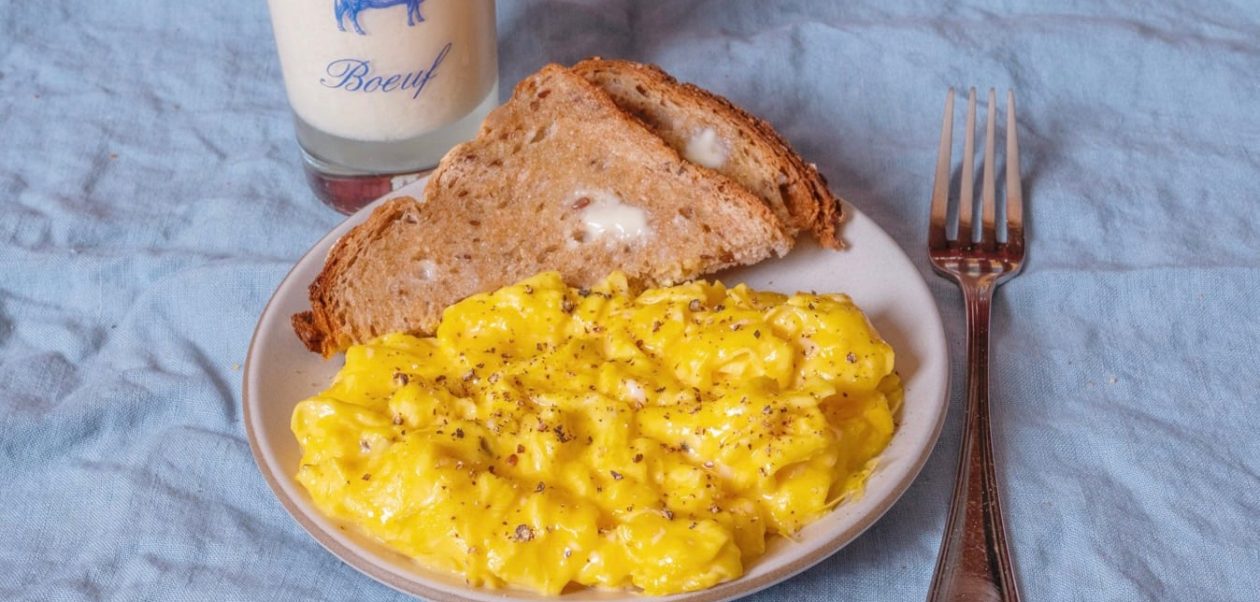
Our initial focus is scrambled eggs. When they’re excellent, omg they’re great. When they’re awful, eek! A few small choices will yield a tender scramble with large, glossy curds without fail. Here are eight guidelines:
1. Salt your eggs before cooking them. How much salt? I’m thrilled you asked! For every two large eggs, use 1/8 teaspoon of kosher salt. And this is crucial: Add the salt before whisking. Salt aids the proteins in retaining moisture as they cook, resulting in very tender eggs.
2. Whisk more than you think necessary. Use an actual whisk, not a fork. A whisk introduces more air into the blend and helps it homogenize correctly. Once the yolks are broken up, continue until the eggs are thoroughly mixed into a consistent, frothy yellow with no egg white streaks. That’s roughly 20 to 30 seconds of good elbow effort.
3. Omit the dairy, but add taste. Milk, cream, or crème fraîche isn’t necessary for creating tender scrambled eggs. Dairy can render the eggs watery, prolonging the cooking; plus, it dilutes the rich egg flavor. But if you wish to include a little grated cheese, dried herbes de Provence, finely sliced chives, a pinch of red pepper flakes, or lots of black pepper, now’s the moment.
4. Use the appropriately sized skillet. For two to four eggs, choose an eight-inch nonstick skillet and adjust size as your egg tally rises. A large skillet disperses the eggs into a thin layer; a smaller skillet gives them sufficient depth to form large, beautiful curds.
5. Be gentle with the heat. Don’t turn the burner to high and let it rip. Position your skillet over medium-low heat and add a small knob of unsalted butter. Tilt the skillet as the butter melts to coat the bottom. When the butter is foamy yet not browned, that’s your signal to add the eggs.
6. Push, don’t stir. Pour the eggs into the skillet and leave them be. You’ll observe a thin layer starting to set around the sides. Use a silicone spatula to carefully push the cooked egg from the edge toward the center. Raw egg will flow in to occupy the empty space. Allow it to set, then push once more.
7. Cut the heat when nearly done. When the eggs are largely set, turn off the heat and fold them gently. The last 20 or 30 seconds are when good scrambled eggs become overdone scrambled eggs.
8. Serve them before they appear finished. This is the crucial one, and you must trust me. The eggs possess enough residual heat to keep cooking after being removed from the skillet, so when you have soft curds that still appear slightly wetter and glossier than ultimately desired, place them on a plate. By the time you settle down, they’ll be perfect.
Since childhood, my favorite way to consume scrambled eggs has been piling them on buttered toast. But you can also opt for diner-style with bacon, hash browns, anything you enjoy. Enjoy!
Casey Elsass is a food writer, recipe developer, and cookbook author based in Brooklyn. He wrote the bestselling cookbook What Can I Bring?: Recipes to Help You Live Your Guest Life and has co-authored more than 30 cookbooks. His compositions have been featured in publications such as The New York Times, New York Magazine, Bon Appétit, NPR, Food52, and, naturally, Cup of Jo.
P.S. Three favorite egg recipes, and a gentle scramble with shallots and comté.
(Photos by Pacifico Silano.)
Title: Mastering the Craft of Perfectly Crafted Scrambled Eggs
Scrambled eggs are a breakfast classic beloved for their simplicity and versatility. However, achieving the ideal texture and flavor can be elusive. Here’s an insightful guide to aid you in preparing scrumptious scrambled eggs every time.
### Ingredients:
– 4 large eggs
– Salt and freshly ground black pepper
– 2 tablespoons of whole milk or cream (optional for added creaminess)
– 1 tablespoon of unsalted butter
– Fresh herbs (like chives or parsley) for garnish (optional)
### Instructions:
#### 1. Pick Quality Eggs:
The base of impeccable scrambled eggs is quality. Choose fresh, organic eggs if feasible. The fresher the eggs, the finer the flavor and texture.
#### 2. Break and Whisk:
Crack the eggs into a mixing bowl. Add a pinch of salt and a dash of pepper. If you favor creamier eggs, include milk or cream. Whisk the mix thoroughly until yolks and whites are completely combined, and the mixture is slightly frothy. This stage is pivotal for air incorporation, contributing to fluffiness.
#### 3. Heat the Pan:
Opt for a non-stick skillet or a well-seasoned cast-iron pan. Position it over medium-low heat. Patience is essential; cooking eggs over high heat may lead to dryness and overcooking.
#### 4. Melt the Butter:
Introduce the butter to the pan, letting it melt gradually. Swirl it around to coat the bottom evenly. The butter should foam but not brown, signaling the pan is at the correct temperature.
#### 5. Cook the Eggs:
Pour the whisked eggs into the pan. Allow them to sit undisturbed briefly to start setting. Using a spatula, gently stir the eggs, pushing them from the edges to the center. This method creates tender curds.
#### 6. Manage the Heat:
If the eggs are cooking too rapidly, lower the heat. The aim is to cook them slowly to preserve moisture and reach a creamy texture.
#### 7. Take Off the Heat:
When the eggs are mostly set but still slightly runny, remove the pan from the heat. The leftover heat will continue to cook them to perfection. Overcooking can lead to rubbery eggs, so it’s preferable to undercook.
#### 8. Present Immediately:
Transfer the scrambled eggs to a plate immediately to cease further cooking. Garnish with fresh herbs for added flavor and a touch of elegance.
### Tips for Excellence:
– **Experiment with Additions**: Enhance your scrambled eggs with cheese, sautéed veggies, or smoked salmon for variety.
– **Mind the Salt**: Salt the eggs before cooking to help break down the proteins, yielding tender eggs.
– **Handle Gently**: Stir the eggs delicately to prevent breaking the curds too much, keeping their soft texture.
### Conclusion:
Perfectly prepared scrambled eggs are a craft that melds quality ingredients, meticulous technique, and a bit of patience. By following these steps, you can savor a delightful breakfast dish that’s both straightforward and satisfying. Whether enjoyed alone or as part of a broader meal, scrambled eggs are a versatile and tasty choice for any occasion.