
Primary care physicians like myself frequently discuss “the tincture of time.” It’s one of our most efficient treatments: a few days’ worth of wait and observe. It’s not always an easy prescription to take when you’re the one on the medical bench. When the MRI could clarify the back pain. When your youngster’s sore throat persists, even if the strep test is negative. Naturally, sometimes we proceed quickly; we conduct the scan or expedite the antibiotics. There are valid reasons: immunocompromise, or an unyielding worry. However, usually, a considerate strategy and a bit more time suffice.
I’ve been on the opposite side of the medical bench, too. In my late spouse Paul’s situation, the tincture of time for his back pain led somewhere unexpected: to terminal cancer. To dying at the age of 37. And yet, almost every time, time does heal. The symptoms subside. The path becomes more evident. The child springs out of bed.
Paul was a physician, too. We used to discuss patients, their narratives, the responsibility of deciding what mattered and what could wait. Now 11 years out from losing him, I see 21 patients in my office most days. Typically two are ill enough to require the emergency department. Each morning as I review my list, the question hangs: which two? Perhaps this young educator has pelvic inflammatory disease, not a yeast infection. Perhaps this widower’s rapid heartbeat is an arrhythmia, or profound loneliness, not simple dehydration. Sometimes by the day’s end, the answer remains elusive. “Your white blood cell count will return overnight, and if it’s elevated, we should proceed with the CT scan.” “Would you message me on Thursday? The antibiotic ought to work within two days — so that’s our critical moment.” A little more time. We’ll reconvene at the next step.
General internists, like myself, don’t focus on one organ system. If we specialize in anything, it may be learning how, and when, to be patient. More testing can bring reassurance, but it can also bring harm: side effects, radiation exposure, new stress. So, frequently, we adopt the watchful waiting approach, trusting the patient’s self-awareness and my intuition molded by years of identifying patterns. What I can offer isn’t assurance, it’s presence. If we must change direction, I’ll be there.
Paul passed away in 2016, two years following his diagnosis, eight months after the birth of our daughter. He spent much of those final years working on the manuscript that would become his memoir, When Breath Becomes Air. One of the hardest aspects of losing him is that he never saw his book reach its audience. However, it’s also one of the beautiful elements: he has a legacy.
He has another one he never got to meet.
These days, when I return from the clinic, I’m welcomed by big brown eyes that resemble Paul’s, framed with the same long lashes. They belong to his daughter — our daughter — Cady, now a witty, mischievous seventh-grader. I put down my bag, thank our sitter, and settle in to hear the latest preteen slang and stories, and I realize my next big wait-and-see is with her.
She’s the following great love of my life. And for a parent, every decision — discipline, independence, praise, denying permission, whether to buy the watch — is a best guess. Was transferring schools the right decision? What could the teenage years bring? Above all, am I doing right by this girl whose childhood is so different from mine?
With my patients, I actively consider potential disastrous outcomes in my mind: if things deteriorate, I need to be ready to act, STAT. Later at home, looking at my daughter, my mind occasionally shifts to clinical alertness. But as a parent, when catastrophic thoughts arise, I encourage myself to breathe. She’s evolving, and she’s not a differential diagnosis. There’s not just one correct answer.
Cady hasn’t read her father’s book yet — though she knows it’s available when she chooses. Our bookshelves, amidst poetry collections and Warrior Cats novels, are dotted with copies. Will she reach for one as a teenager? Will Paul seem nearer when she does, or more distant? What will she take forward, or might she set the book aside? She’ll discover her own answers.
I craft thoughtful plans, and I allow time to work its magic. It’s my daughter’s journey. I provide what insights I have. Then we wait, together.
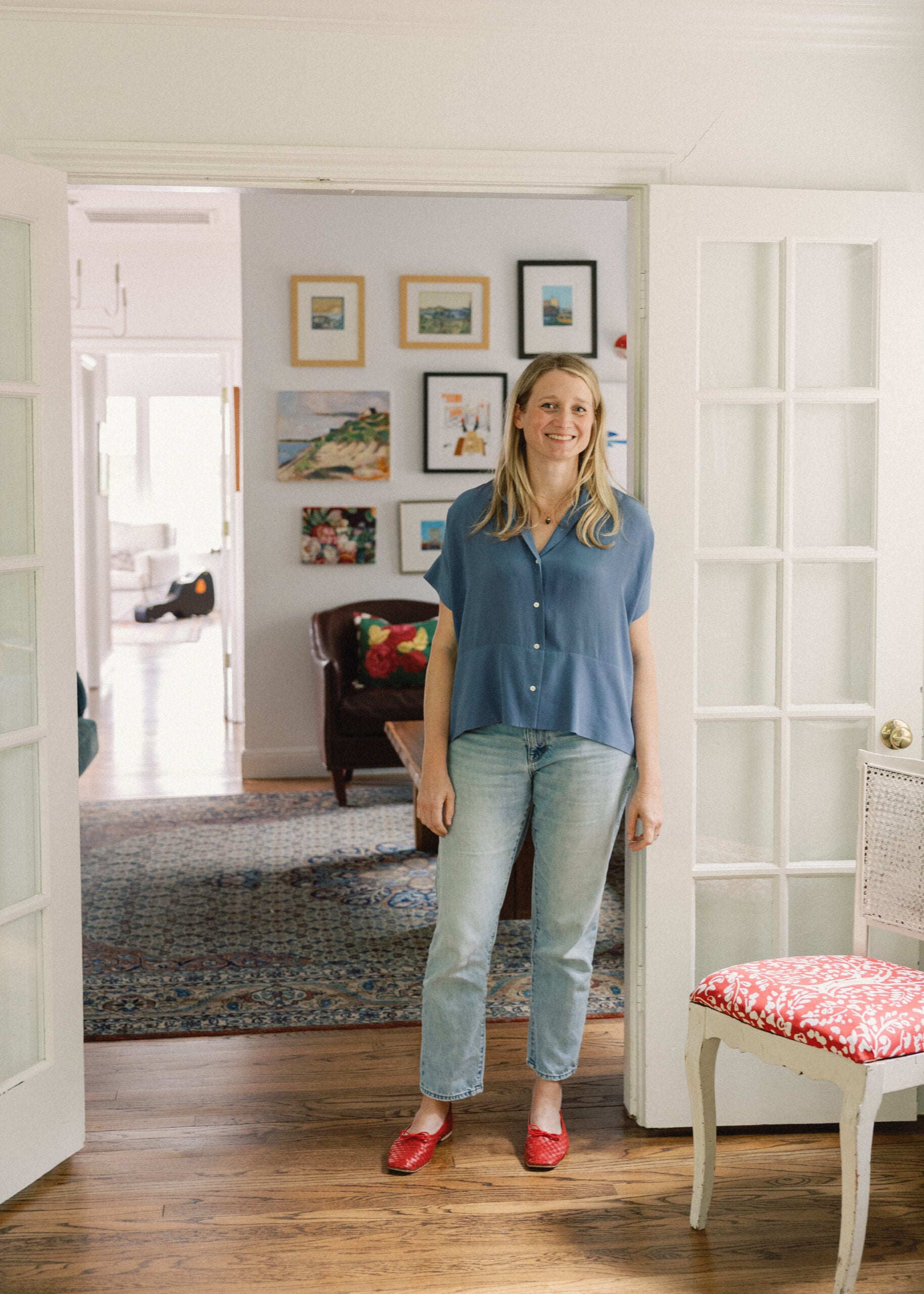
Lucy Kalanithi is a clinical associate professor of medicine at Stanford University. She wrote the epilogue to When Breath Becomes Air, her late husband Paul Kalanithi’s bestselling memoir. She resides with her daughter in the Bay Area, where Joanna, her twin sister, frequently visits and gets defeated by her niece in Block Blast.
P.S. Lucy’s exquisite home renovation, and Lucy’s Big Salad issue. xoxo
(Illustration by Abbey Lossing for Cup of Jo. Beach photo by Jenny Nelson Photography.)
**The Curative Nature of Time**
Time is often seen as the foremost healer, a belief deeply rooted in human tradition and thought. This sentiment highlights the notion that time’s passage can mend emotional wounds, offer clarity, and aid personal growth. Although time alone may not cure all maladies, its role in the healing journey is deep and varied.
**Healing of the Emotions**
A widely recognized aspect of time’s curative nature is its ability to ease emotional distress. After enduring a traumatic event, like the loss of a loved one or the end of a significant relationship, individuals often find comfort in the passing of time. Initially, the pain may seem overwhelming, but as days turn into weeks and weeks into months, the intensity of the emotions typically diminishes. This gradual alleviation enables individuals to process their feelings, gain perspective, and eventually discover a new normal.
**Psychological Viewpoint**
From a psychological perspective, time allows for the natural progressions of grief and recovery to take place. According to the Kübler-Ross model, individuals experience stages of grief, including denial, anger, bargaining, depression, and acceptance. Time offers the necessary space for individuals to navigate these stages at their own speed, ultimately leading to healing and acceptance.
**Physical Recovery**
Time is also vital in physical recovery. The human body has a remarkable ability to heal itself, and time is a key element of this process. Whether healing from a minor injury or a significant procedure, the body needs time to regenerate cells, diminish inflammation, and regain function. Medical interventions can support this process, but time remains an essential factor in achieving full recovery.
**Cognitive and Developmental Progress**
Beyond emotional and physical healing, time aids cognitive and developmental progress. As people age, they gather experiences and knowledge that shape their understanding of the world. This maturation process often leads to increased resilience, wisdom, and the ability to manage future challenges. Time allows for reflection and learning, enabling individuals to grow and evolve over their lives.
**The Importance of Patience and Acceptance**
While time is a potent healer, it is important to acknowledge that healing is not passive. Patience and acceptance are crucial elements of letting time work its wonders. Embracing the current moment, acknowledging emotions, and accepting the pace of recovery can enhance the healing journey. Mindfulness activities, such as meditation and deep breathing, can help individuals cultivate patience and acceptance.
**Final Thoughts**
Time’s healing power is a testament to the resilience and adaptability of the human spirit. While time alone may not eliminate every scar, it provides the essential background for healing to occur. By allowing time to pass, individuals can find peace, gain perspective, and ultimately emerge stronger from their experiences. In a world that often demands quick solutions, the gentle, gradual healing offered by time is a reminder of the lasting power of patience and hope.